The most expensive mistake in St. Paul isn't starting construction too late. It's pouring footings without understanding the soil underneath. We've seen projects along West 7th Street stall for months because the bearing layer wasn't what the drawings assumed. The Mississippi River carved complex terrace deposits through this city. Glacial till sits next to ancient floodplain silts. You can't guess. Our shallow foundation design work starts with site-specific geotechnical data. We correlate SPT drilling results with lab testing to nail down allowable bearing pressure. No generic assumptions. No recycled reports from across town. Every footing, every strip foundation, every mat gets a design backed by numbers from your exact lot. That's how you pass inspection in St. Paul on the first submittal.
In St. Paul, the difference between a 30-inch footing and a 60-inch footing is often just 18 inches of bad soil—and we find it before the concrete truck arrives.
Service characteristics in St. Paul
Risks and considerations in St. Paul
The soil changes fast in St. Paul. Highland Park sits on thick glacial till—dense, silty, excellent bearing. Five miles northeast, the East Side has pockets of organic fill and buried topsoil from mid-century development. A footing design that works on Ford Parkway could fail on Payne Avenue. The risk isn't just bearing failure. It's long-term differential settlement. One corner of the building settles half an inch more than the rest. Drywall cracks. Doors stick. Owners call lawyers. We mitigate this by specifying consistent bearing elevations across the footprint. On marginal soils, we compare shallow foundation options against ground improvement like stone columns. The cost analysis is straightforward. Spend a little more on geotechnical engineering now, or spend a fortune on foundation repair later. Contractors who've worked both sides of the river understand this trade-off.
Our services
Our St. Paul shallow foundation scope covers the full engineering workflow from subsurface investigation through permit-ready drawings. Every project gets a Ramsey County frost depth check and a bearing capacity calculation specific to the site's stratigraphy.
Spread Footing and Strip Footing Design
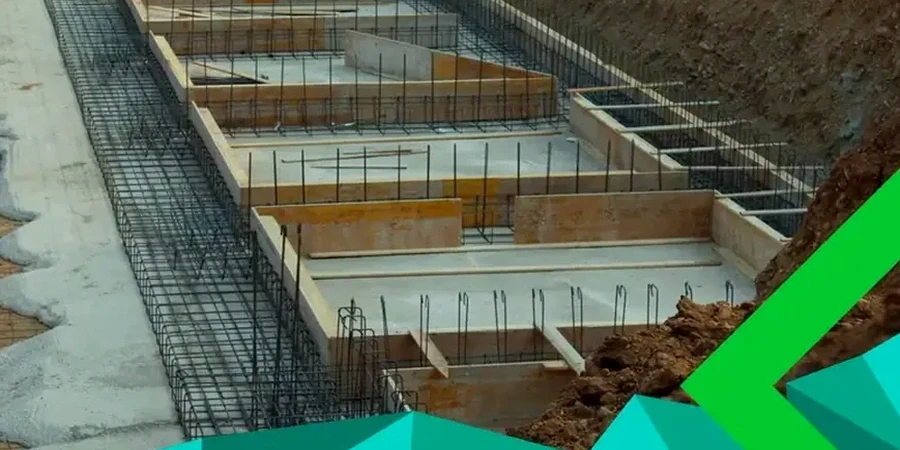
We size individual and continuous footings for residential and light commercial structures. Output includes allowable bearing pressure, minimum embedment depth, reinforcement schedule, and settlement analysis per IBC 1805.
Mat Foundation and Stiffened Slab Design
For poor soils or heavy column loads, we design mat foundations that bridge soft spots. Finite element analysis models soil-structure interaction. We specify thickened edges, interior beams, and reinforcement to control differential movement.
Common questions
What is the required frost depth for footings in St. Paul?
The IBC specifies a minimum 60-inch depth below finished grade for footings in Ramsey County. We set the bottom of footing at or below this elevation to prevent frost heave.
How much does a shallow foundation design cost for a St. Paul project?
For a typical single-family or small commercial building, engineering fees range from US$1,970 to US$2,850. This includes soil parameter review, bearing capacity calculations, footing sizing, and the stamped drawing. Complex sites with variable stratigraphy or high column loads fall at the upper end.
Do you need soil borings before designing footings?
Yes. We cannot design a code-compliant shallow foundation without subsurface data. Typically we need SPT borings extending at least 10 feet below the proposed footing elevation. The data drives the bearing capacity and settlement models.
What loads do you consider in the footing design?
We apply ASCE 7 load combinations: dead, live, snow, wind, and seismic. St. Paul snow loads are significant. We check bearing pressure under the maximum downward load and verify stability under lateral wind and seismic cases.