A contractor on a mixed-use development near University Avenue hit a layer of varved clay that looked like silt in the field, but the hydrometer told a different story. The grain size analysis from our lab showed over 60% clay fraction, and that completely changed the excavation support requirements. In St. Paul, where glacial deposits and Mississippi River alluvium create wildly variable particle-size distributions, relying on visual classification alone is a gamble. A proper sieve and hydrometer test, run in accordance with ASTM D6913 and D7928, gives you the quantitative data needed for a defensible USCS classification. We see this pattern across Ramsey County: what looks like sandy lean clay often has enough fines to dictate a different bearing strategy. The lab setup includes calibrated sieves from 3 inches down to No. 200, plus a sedimentation cylinder for the minus-200 material.
A 3% difference in clay content measured by hydrometer can move a soil from CL to CH, altering lateral earth pressures by over 20% in St. Paul's glaciolacustrine deposits.
Service characteristics in St. Paul
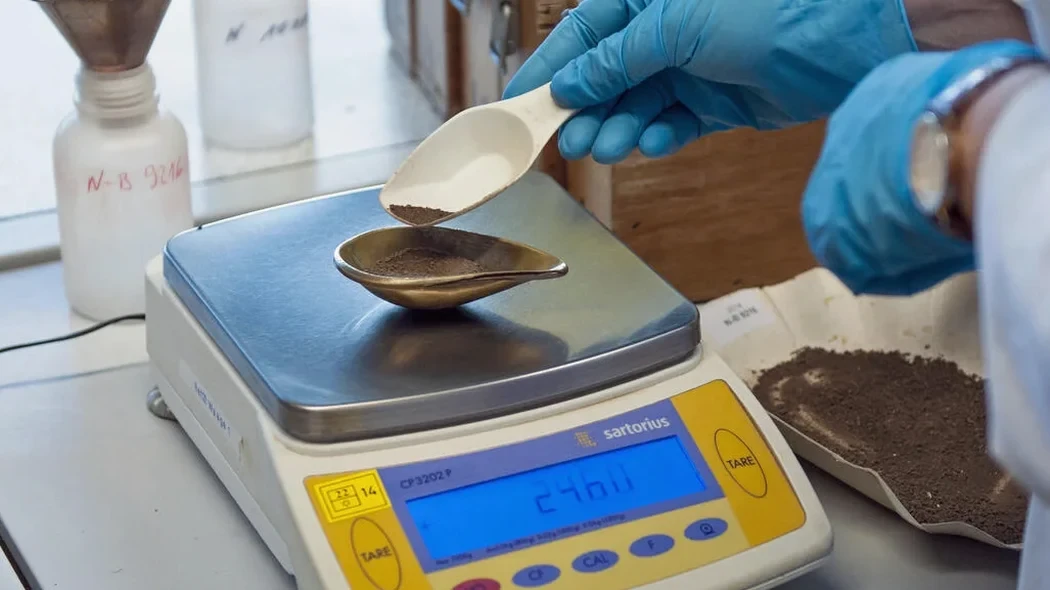
Risks and considerations in St. Paul
The soil profile changes dramatically within a half-mile radius in St. Paul. Around the Cathedral Hill area, you find sandy loams over weathered sandstone where a sieve-only analysis might suffice for a shallow footing. Drive east toward the Phalen Creek corridor and you hit up to 30 feet of compressible floodplain silts where the hydrometer becomes non-negotiable. Overlooking the minus-200 fraction in those low-lying areas leads to underestimated settlement and, worse, mischaracterized liquefaction susceptibility. The correlation between fine content and cyclic resistance ratio is well documented in Seed & Idriss's work, and without a hydrometer you are guessing on a parameter that drives significant foundation cost. For deep excavations near the Mississippi, a grain size curve that misses the clay fraction can also produce an unconservative permeability estimate, directly affecting dewatering system design.
Our services
When a single grain size curve is not enough to characterize the site, we integrate the following complementary testing operations to build a complete geomechanical profile for St. Paul projects.
Atterberg Limits & Plasticity Chart
Liquid limit, plastic limit, and plasticity index on the same sample used for grain size, following ASTM D4318. Essential for classifying fine-grained soils in the USCS and predicting compressibility and shrink-swell potential in St. Paul's clay-rich tills.
Hydrometer-Only Analysis for Fines Verification
When a previous lab report only ran a sieve, we can perform a standalone hydrometer on the minus-No.200 fraction per ASTM D7928 to correct the gradation curve and verify the fines content. Common for value-engineering reviews on St. Paul municipal projects.
Common questions
What does a grain size analysis with sieve and hydrometer cost in St. Paul?
For a combined sieve and hydrometer test on one sample in the St. Paul area, the cost typically ranges from US$90 to US$160 depending on whether the sample requires washing, the number of sieves in the stack, and the turnaround time. Projects needing multiple samples or expedited results may fall toward the upper end of that range.
How long does it take to get results from a combined sieve and hydrometer test?
Standard turnaround is 3 to 5 business days from sample receipt. The hydrometer portion requires a 24-hour sedimentation period plus temperature-controlled readings at precise time intervals, so rushing the test compromises accuracy. Expedited 48-hour service is available for St. Paul projects with critical path deadlines.
Do you need both a sieve and a hydrometer test on every sample?
Not necessarily. If visual classification and wash-through indicate less than 5% passing the No. 200 sieve, a sieve-only analysis per ASTM D6913 is usually sufficient. However, for any St. Paul sample with more than 10% fines, the hydrometer becomes essential to correctly classify the soil and determine engineering parameters like permeability and frost susceptibility. More info.