The Mississippi River bluffs of St. Paul hide a complex geological puzzle that challenges every tunneling project. Beneath the surface, layers of St. Peter Sandstone interbed with compressible glacial lake clays and outwash silts, creating a soft soil matrix that demands rigorous characterization. The water table here often sits just 15 to 25 feet below grade along the river corridor, introducing high pore pressures that can destabilize an excavation face in minutes. For engineers working along the Central Corridor or near the Shepard Road riverbank, understanding the transition zones between these formations is not optional — it is the baseline for any viable tunnel design. Our team applies lab testing programs and in-situ investigation methods to map these units precisely, integrating the results into numerical models that reflect real ground behavior. As St. Paul continues to upgrade its combined sewer overflow network with deep storage tunnels, the demand for reliable data on soft ground behavior has never been higher.
In St. Paul, a tunnel's success is decided long before the TBM arrives — it is defined by how well you read the glacial stratigraphy.
Service characteristics in St. Paul
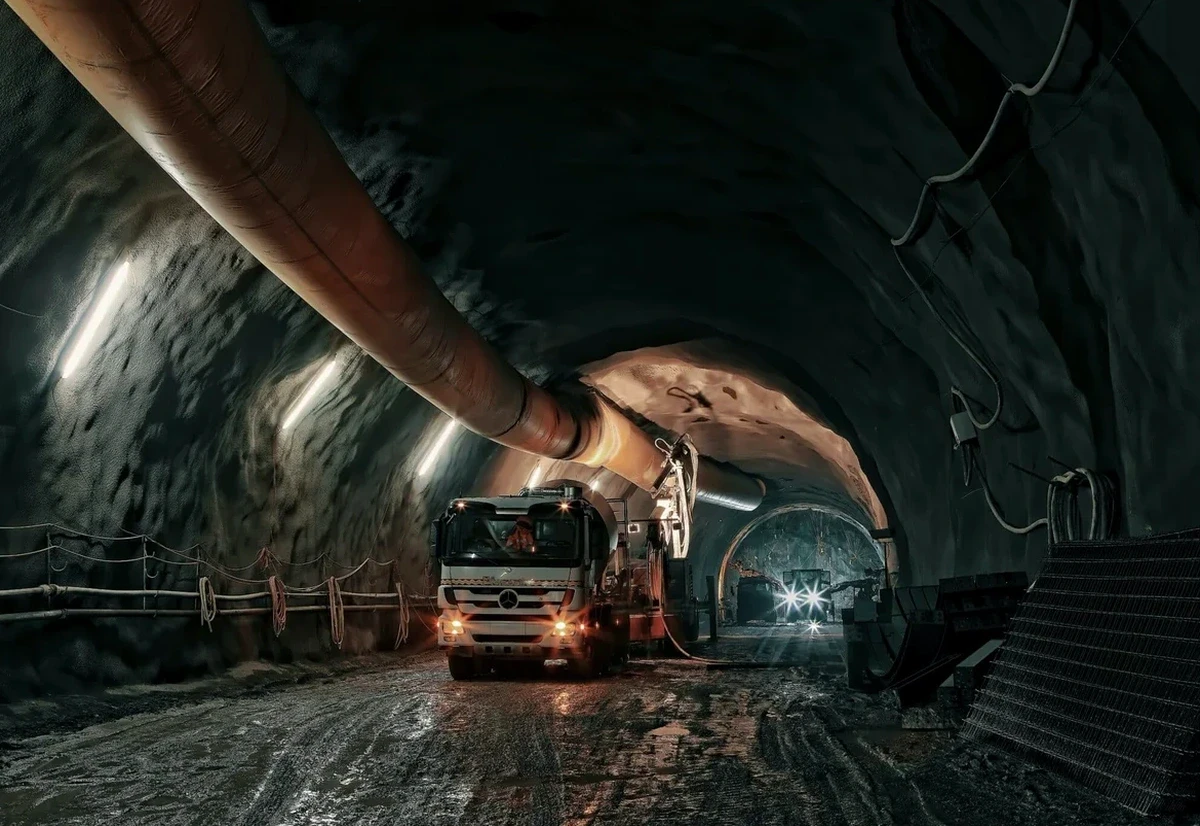
Working video
Risks and considerations in St. Paul
A deep sewer tunnel project near Harriet Island encountered a lens of clean, saturated sand within a massive clay unit — a pocket invisible on widely spaced borings. Within hours of excavation, water inflow mobilized the sand, creating a void that propagated upward and caused a small sinkhole at a parking lot surface. The repair delayed the schedule by six weeks and triggered a costly forensic investigation. This is the reality of soft ground tunneling in St. Paul: the glacial environment produces abrupt lateral facies changes that a standard investigation can miss. Uncontrolled face loss in soft clay, excessive consolidation settlement beneath historic brick foundations in Lowertown, or blowout failure under hydrostatic pressure are all plausible failure modes. The mitigation lies in a phased investigation — combining lab strength data, pore pressure monitoring, and conservative face support pressure calculations — and in recognizing that the ground will not give you a second chance to get the parameters right.
Our services
The analysis package for St. Paul soft soil tunnels integrates laboratory testing with numerical modeling to deliver actionable design parameters. Each service is structured around the specific failure mechanisms that the local geology presents.
Tunnel Face Stability and Settlement Analysis
Using limit equilibrium and finite element methods, we evaluate the required face support pressure for EPB or slurry TBMs advancing through the Des Moines Lobe clays. The analysis predicts surface settlement troughs, assessing impact on adjacent structures near University Avenue and the downtown core.
Laboratory Testing Program for Soft Ground Characterization
A testing suite tailored to the St. Peter Sandstone contacts and glacial clay units: consolidation, triaxial, and permeability tests. We focus on defining the stress-strain behavior and consolidation properties that govern long-term tunnel lining loads and short-term excavation stability.
Common questions
What is the typical cost range for a geotechnical analysis of a soft soil tunnel in St. Paul?
The cost depends on the tunnel length, depth, and complexity of the ground conditions. For a typical deep sewer or utility tunnel project in the St. Paul area, the analysis package — including lab testing, face stability modeling, and settlement prediction — generally ranges from US$4,460 to US$18,430.
How does the St. Peter Sandstone affect tunnel excavation in St. Paul?
The St. Peter Sandstone is a relatively clean, weakly cemented quartz sandstone that can transition abruptly into overlying glacial clays. When tunneling through the contact zone, mixed-face conditions create uneven cutter wear and can lead to face instability if the clay is saturated. Our analysis maps these transition depths precisely to define the support pressure window.
Which ASTM standards apply to soft ground tunnel testing in the USA?
The core standards for measuring strength and compressibility of soft soils include ASTM D4767 for consolidated-undrained triaxial testing, ASTM D2850 for unconsolidated-undrained triaxial testing, and ASTM D2435 for one-dimensional consolidation. These are applied alongside the load provisions of ASCE 7 and the IBC.
What is the biggest risk when tunneling through glacial clays in St. Paul?
The primary risk is face loss due to low undrained shear strength combined with high groundwater pressures. The compressible Des Moines Lobe clays can also generate significant long-term consolidation settlement at the surface, threatening historic masonry buildings unless the tunnel support design accounts for the full stress path. More info.